04 November 2026
Understanding Tree Removal Cost Factors Before You Start
Presented by @treeremovalcostfactorsway
Why Tree Removal Pricing Varies So Much
When a tree needs to come down, the first question is almost always about price. But unlike buying a gallon of paint or hiring a plumber for a standard fix, tree removal is deeply tied to the specific conditions of your property. A small, straight tree in an open yard is one thing. A mature tree removal job with overhead obstacles, a tricky lean, and a tight landing zone is something else entirely. The tree removal cost factors that drive that difference are worth understanding before you call for a quote. They explain why one estimate might be twice as high as another and help you ask better questions when you do get that number.
The Tree Itself: Size, Species, and Condition
Every arborist starts by looking at the tree. The single biggest factor in any quote is the tree diameter measurement. Trunk diameter at breast height, or DBH, is the standard way professionals size up the work. A tree with a 12-inch trunk might be a straightforward job for two people with chainsaws. A tree with a 36-inch trunk often requires heavy equipment, more time, and a larger crew. That difference shows up fast in the estimate.
Species matters too. Some trees have dense, heavy wood that is harder to cut and more dangerous to handle. Others have brittle branches that break unpredictably. A professional arborist will also assess the tree's health. A dead or decaying tree may be more prone to splitting or falling unexpectedly during removal, which increases risk and requires more careful planning. A hazard tree assessment is a standard step before any work begins, and the findings directly influence the quote.
The tree root system also comes into play, especially if the tree is being taken down because of structural problems underground. Roots that have damaged a foundation or are intertwined with utility lines can complicate the removal process and raise the cost.
Location and Site Accessibility
Where the tree stands on your property changes everything. A tree that is close to your house, a driveway, or a neighbor's fence requires far more precision than one in the middle of a field. The crew has to bring it down in sections, often using ropes and rigging to lower pieces safely. That method is slower and takes more people, and that time is reflected in the price.
Site accessibility is another major piece of the puzzle. If the crew can drive a truck and chipper right up to the tree, the job is simpler. If the tree is in a backyard with a narrow gate, or on a slope, or behind a pool, the team may have to carry equipment by hand or use smaller machinery. That extra labor adds to the cost. In some cases, a crane service is necessary to lift heavy sections over a house or other structures. Crane time is expensive, but it can be the safest option when the tree is in a tight spot.
Overhead obstacles like power lines, cable lines, or roof overhangs add another layer. Power line clearance requires extra caution and sometimes coordination with the utility company. The crew may need to work around live lines, which slows things down and increases the skill level required.
Local Rules and Permits
Regulations vary by location, and they can affect both the timeline and the total cost. In DeLand, Florida, tree removal permits are required for certain species and sizes, especially for protected trees or those in environmentally sensitive areas. The permitting process may require an arborist report to document the tree's condition and justify its removal. That report is an added expense, but it is often non-negotiable for legally compliant work.
DeLand city regulations also address how close you can remove trees to property lines, how stumps must be handled, and whether replacement planting is required. A reputable tree service will factor these into the estimate. Failing to pull the right permit can lead to fines and even a requirement to replant, so it pays to work with a company that knows the local rules.
Florida tree removal permits are not the same everywhere. Some counties have stricter rules than others. If you are near a conservation area or a waterway, the requirements may be more involved. A good estimator will ask about your property's zoning and check the local code before giving a final number.
Disposal and Cleanup
What happens after the tree is down is part of the cost. Tree disposal fees cover hauling away logs, branches, and leaves to a processing facility. Some companies include chipping and hauling in the base price. Others charge extra, especially if the volume is large or the dump site is far away. If you want the firewood left on site, that usually reduces the cost. If you want the area completely cleared and the stump removed, that adds to it.
Tree stump grinding is a separate service that many homeowners choose after the tree is gone. Grinding the stump down below grade prevents tripping hazards and makes it easier to replant grass or a garden. It also keeps the stump from attracting pests. The cost of stump grinding depends on the stump's diameter, the root spread, and how deep you want it ground. Some companies bundle it with the removal; others quote it separately.
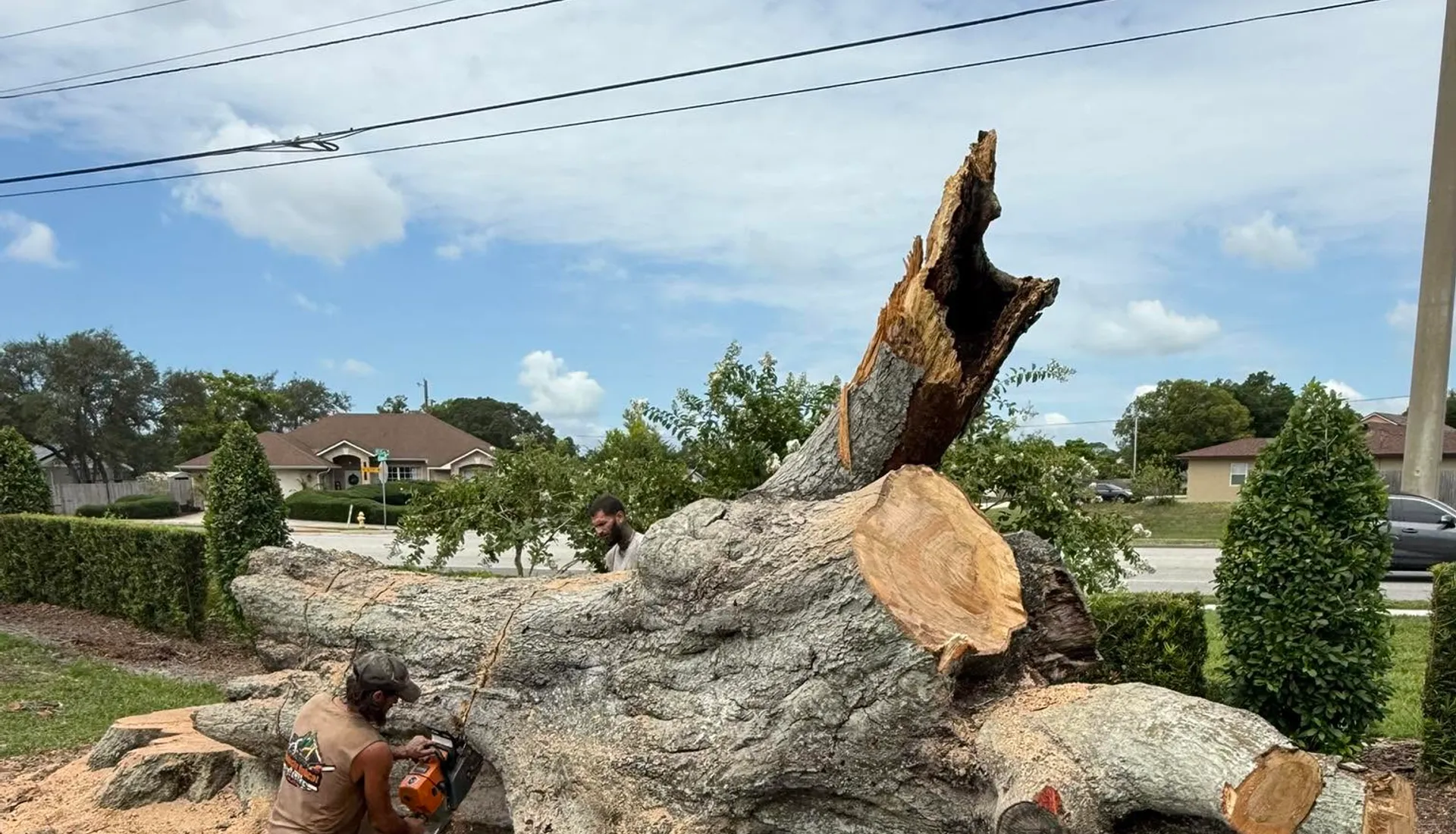
Landscape preservation is another consideration. If you have flower beds, irrigation lines, or delicate plants around the tree, the crew needs to take extra care. That might mean using plywood to protect the lawn or hand-carrying brush instead of driving over the garden. It takes more time, but it is often worth the peace of mind.
Risk, Insurance, and Emergency Work
Tree removal is inherently dangerous. A branch can break unexpectedly, a rope can fail, or a ladder can slip. Tree removal insurance is not optional. A professional company carries liability insurance to cover damage to your property and workers' compensation for their crew. If a company gives you a very low estimate, ask about their insurance. An uninsured crew might save you money upfront, but if something goes wrong, you could be on the hook for property damage liability or medical bills. That is a risk no homeowner should take.
Emergency tree removal is a different animal. If a storm has just blown through and a tree is leaning on your roof or blocking your driveway, the cost is higher than a scheduled removal. The urgency, the after-hours timing, and the added danger all push the price up. Emergency services also require quick decision-making. A company that can mobilize a crew and a crane within hours provides a valuable service, but that speed comes at a premium.
All of these elements feed into the tree removal cost factors that shape your final estimate. The size of the tree, its location, the local regulations, the disposal method, and the level of risk all play a part. Understanding these factors helps you see why one tree removal estimate might be $500 and another $5,000. It is not arbitrary. It is a reflection of the work involved.
Getting a Clear Estimate
When you call for a quote, a reputable company will send someone to your property to look at the tree in person. They will measure the trunk, check the lean, look for hazards, and note the proximity to structures and utilities. They will ask about your goals: do you want the stump ground, the wood hauled, the area reseeded? They will also check whether a permit is needed and whether an arborist report is required. That on-site visit is the only way to get a reliable number.
Be wary of quotes given over the phone or based on a photo alone. Too many variables are invisible from a picture. A professional arborist will give you a detailed written estimate that breaks down the work, the timeline, and the cost. They will also explain the tree removal cost factors that apply to your specific job. That transparency builds trust and helps you plan.
Tree trimming cost is sometimes confused with full removal. Trimming is less expensive and less invasive, but it is not the same service. If a tree is dead, diseased, or structurally unsound, trimming is a temporary fix at best. Full removal is the permanent solution.
At the end of the day, the cheapest quote is not always the best value. A thorough, insured, well-planned removal protects your home, your family, and your landscape. Knowing what goes into the price helps you make a smarter decision.